The simulation
3-D magnetohydrodynamic arc
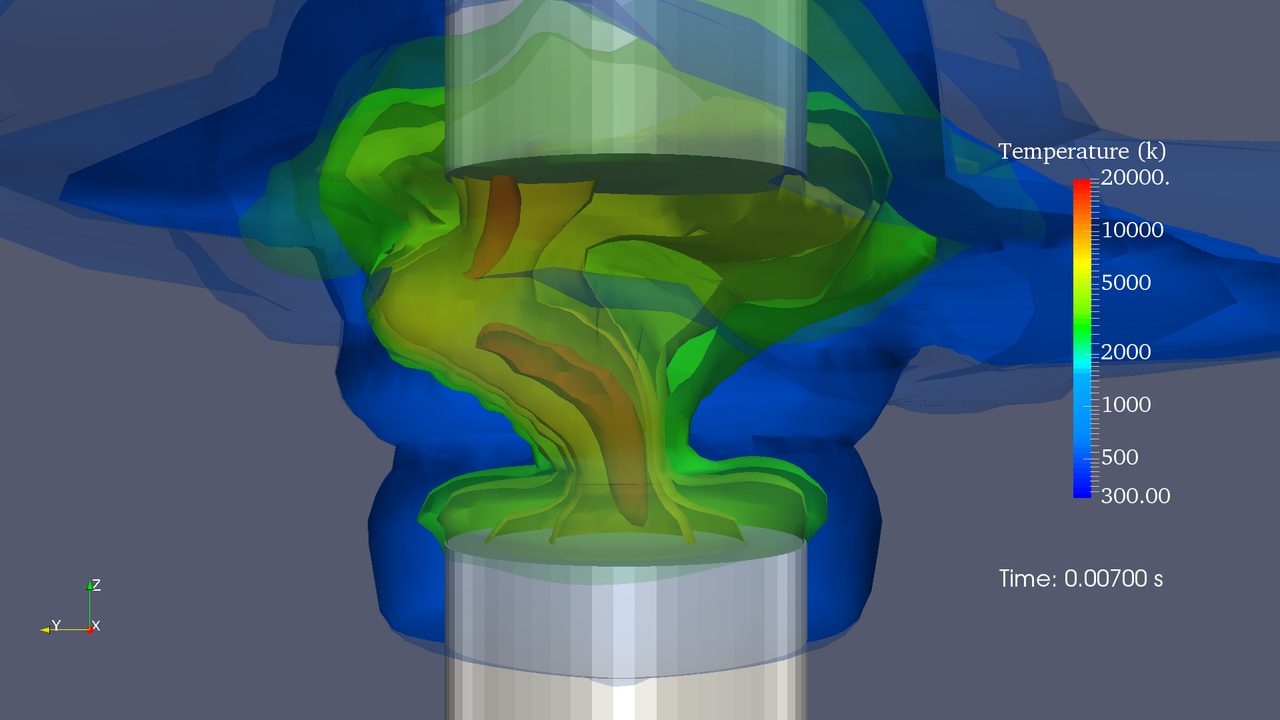
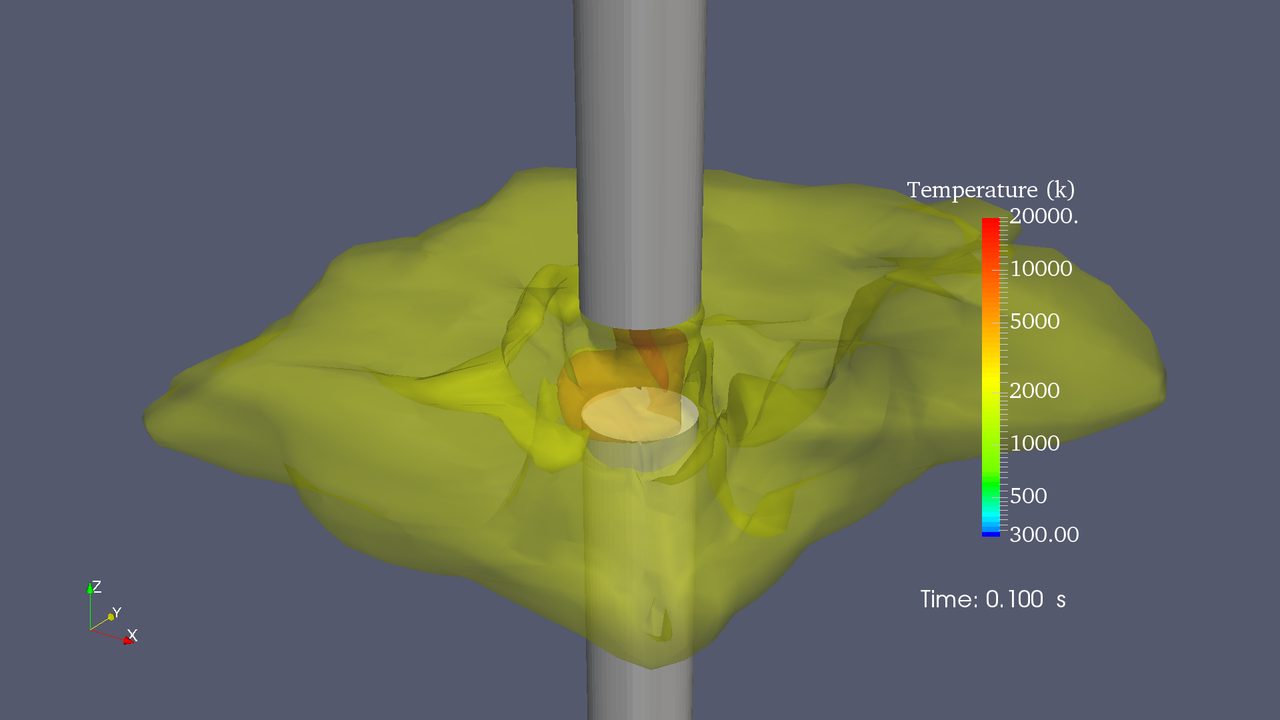
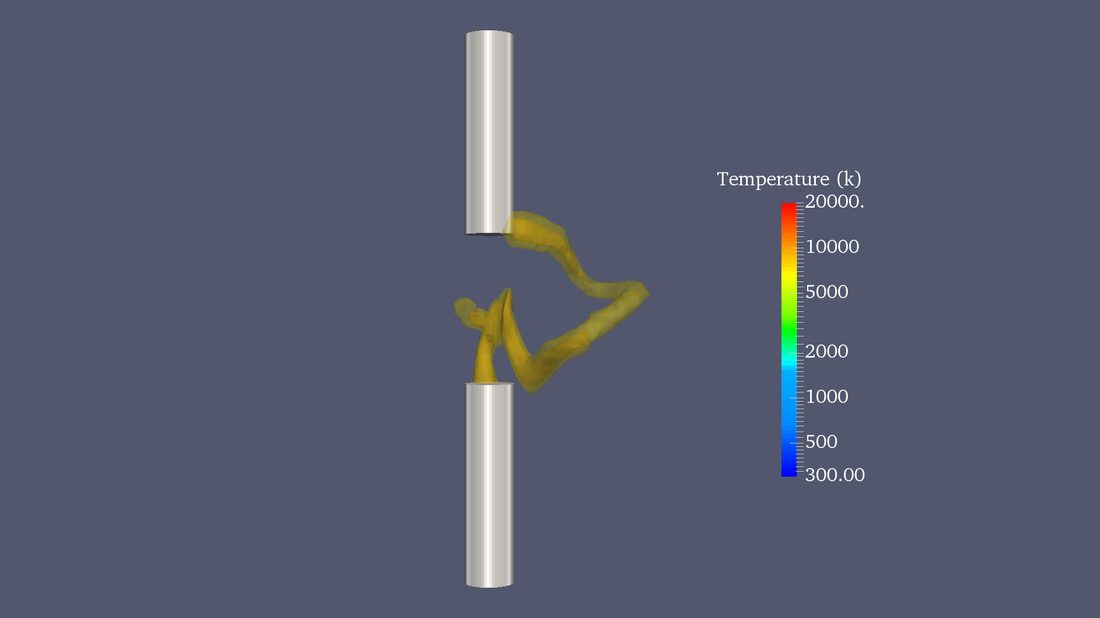
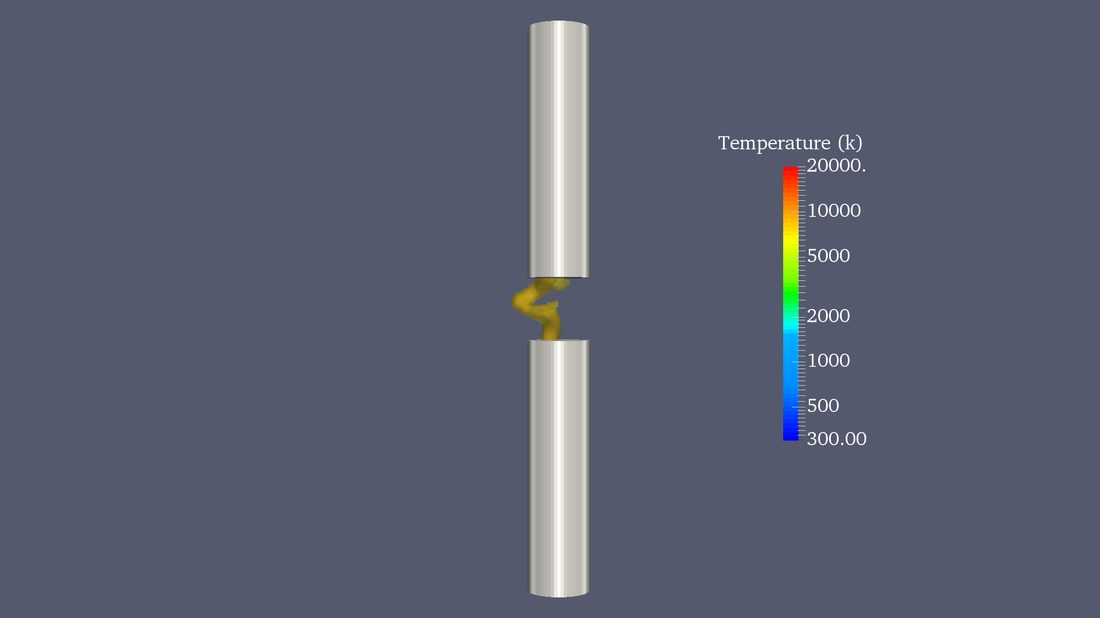
The model is grounded in a full 3-D MHD simulation coupling Navier–Stokes with Maxwell's equations.
DC ARC FLASH · 3-D MHD SIMULATION MODEL
An interactive implementation of the arc model derived from 3-D magnetohydrodynamic simulation.
Interactive calculator
Load a case from the paper and reproduce its published result.
| Model | Arc current | Arc voltage | Arc power |
|---|
Characteristic curves
Rau–Lee V–I at several gaps; marker = your operating point.
How arc voltage grows with electrode gap.
Shaded bands = PPE thresholds. Marker = your working distance.
How it works
The arc behaves as a nonlinear resistance in series with the source.
The calculator solves this implicit equation numerically for the arc current.
Valid for arc current above the transition current.
The simulation
The model is grounded in a full 3-D MHD simulation coupling Navier–Stokes with Maxwell's equations.
The paper
“A new DC arc model based on 3-D DC arc simulation, capable of providing comparable results to available lab testing.”DOI
10.1109/TIA.2016.2587760